
Turn a broad goal into two everyday moments
“Better manners” could mean many things. Choose two situations you would most like to improve and describe them plainly. For example: “Our puppy grabs sleeves when we put the leash on” or “Our dog leaves the bed whenever someone gets up.”
Include what happens just before and after. Where are you? Who is present? What do people usually do next? You do not need to diagnose the behavior. A clear description gives your trainer something useful to ask about.
Share important information before the doorbell rings
Tell the trainer beforehand about discomfort with visitors, a bite history, handling concerns, health issues, or food restrictions. Ask how they would like you to manage the arrival. Do not set up a difficult greeting so the trainer can see it happen.
Existing notes can be enough to begin a conversation. If you have a safely recorded video, ask whether it would be useful. Do not provoke a behavior or put someone in an uncomfortable position to create one.
Make room for learning, not a perfect demonstration
Clear enough floor space to move comfortably and gather the supplies the trainer requests. Keep your normal routine in mind rather than rearranging your entire home to look ideal. Your actual setup is part of what the visit can help you work with.
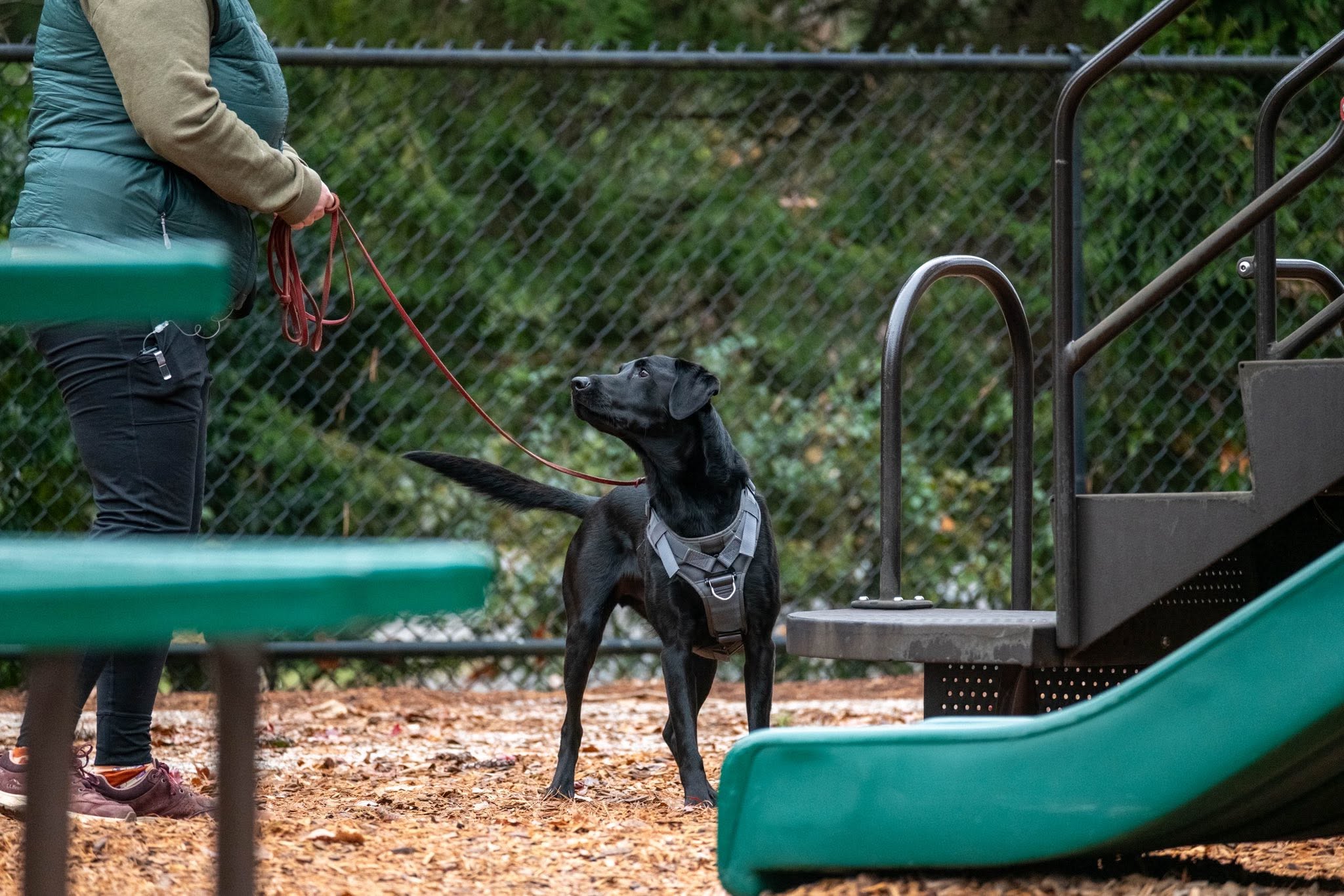
- Your usual leash and comfortable harness or collar.
- Small food rewards your dog can safely eat, with restrictions discussed in advance.
- A short list of goals and questions.
- A plan, agreed with the trainer, for children, visitors, and other animals during the visit.
Decide who needs to practice
Think about who handles the routines you want to change. The person who takes the morning walk may need different coaching from the person who manages evenings. Ask who should attend, and make time for the adults involved to hear the same explanation.
You might write a simple routine map: morning walk, midday break, after-work arrival, evening rest. Put a name beside each. This often makes it easier to discuss where homework can fit without adding a separate training project to every hour.
Ask to try the steps yourself
Watching a trainer is useful, but leave time to practice with your own dog and ask questions. The AKC recommends discussing a trainer’s approach, and the RSPCA supports short, regular reward-based practice. Ask how those principles translate into the specific routine you are learning.
Useful questions include: “What moment am I rewarding?”, “What should I do if this is too hard?”, and “How should I manage the situation when I cannot train?” You should not need to remember every detail from a demonstration without help.
Leave with a small, written agreement
Before the lesson ends, summarize the next step in your own words. Note the place, skill, reward, and stopping point. Confirm how to send questions and which changes to report.
For example, “practice our agreed leash routine in the hallway” is a workable assignment when you also know what the steps are. “Be more consistent” is much less useful without a concrete routine. If the plan does not fit your week, say so before you leave it to chance.
A useful next step
Bring honest details and leave with a plan you can explain. The lesson should help the people in the household as well as the dog.
Sources & further reading
Put a plan into practice.
Tell Emily what you are working on and find a comfortable place to begin.
Explore in-home training