
Start with comfort, health, and permission
Socialization is more than exposure. AVSAB emphasizes positive experiences rather than overwhelming a puppy with people, noise, or other dogs. Ask your veterinarian how to balance early experiences with your puppy’s vaccination status and local health risks.
Also check whether dogs are allowed at the exact place and time you plan to visit. A dog-friendly town does not make every beach, path, patio, or shop dog-friendly. Health suitability, access permission, and your puppy’s comfort are three separate decisions.
An easy first option: a familiar place with one new detail
Start near home when possible. A familiar yard with a different safe surface to investigate, or a quiet spot where your puppy can observe a person at a distance, may be plenty. You can ask a friend to remain still and let the puppy choose whether to approach, rather than arranging an enthusiastic greeting.
Choose one new feature for the outing. If the goal is hearing a bicycle go by, you do not also need a shop entrance, passing dogs, and a busy intersection. Let the experience remain small enough to understand.
Cape Cod Rail Trail: choose the moment carefully
Massachusetts DCR lists dogs as allowed on the Cape Cod Rail Trail and identifies access points in South Yarmouth, South Dennis, Harwich, Brewster, and Orleans. That gives you several places to consider without treating the whole trail as one outing. Check DCR’s current dog rules and the trail map before leaving.
For a first visit, look for room to stay clear of passing cyclists and other users. Keep your dog close enough that the leash cannot cross the path. If the access point is busy or you cannot create space, choose another time. The proposed exercise is simply observing comfortably, not completing a particular distance.
Beach visits need a specific access check
Beach rules vary by managing authority, location, season, and temporary wildlife closures. For Cape Cod National Seashore, the National Park Service maintains a pet-access page and map. It describes restrictions around lifeguard areas and posted shorebird closures, as well as places where pets are not permitted. Do not assume the rules for an ocean beach also apply to a nearby trail or pond.
If you choose a town-managed beach, check that town’s current information and signs. Pick a day when weather, surfaces, and activity suit the puppy. Seeing sand or hearing water from a comfortable permitted spot can be enough; entering the surf is not a socialization requirement.
Businesses and visits with other dogs
Ask individual businesses before entering with a pet. A patio or outdoor shopping area can change quickly as people arrive, so consider whether there is an easy exit and enough space. A place that welcomes dogs may still be too busy for this particular lesson.
For time with another dog, discuss appropriate health and behavior considerations with your vet and trainer. Do not rely on a random greeting to provide a good experience. A planned visit with a suitable dog is different from entering an uncontrolled group.
Build a brief outing plan
Write down what you hope your puppy will experience, where you will stand, and how you will leave. Do not set a fixed minimum time you must remain. A few comfortable moments can be a better outcome than staying until the puppy struggles.
- Check health suitability and current access permission.
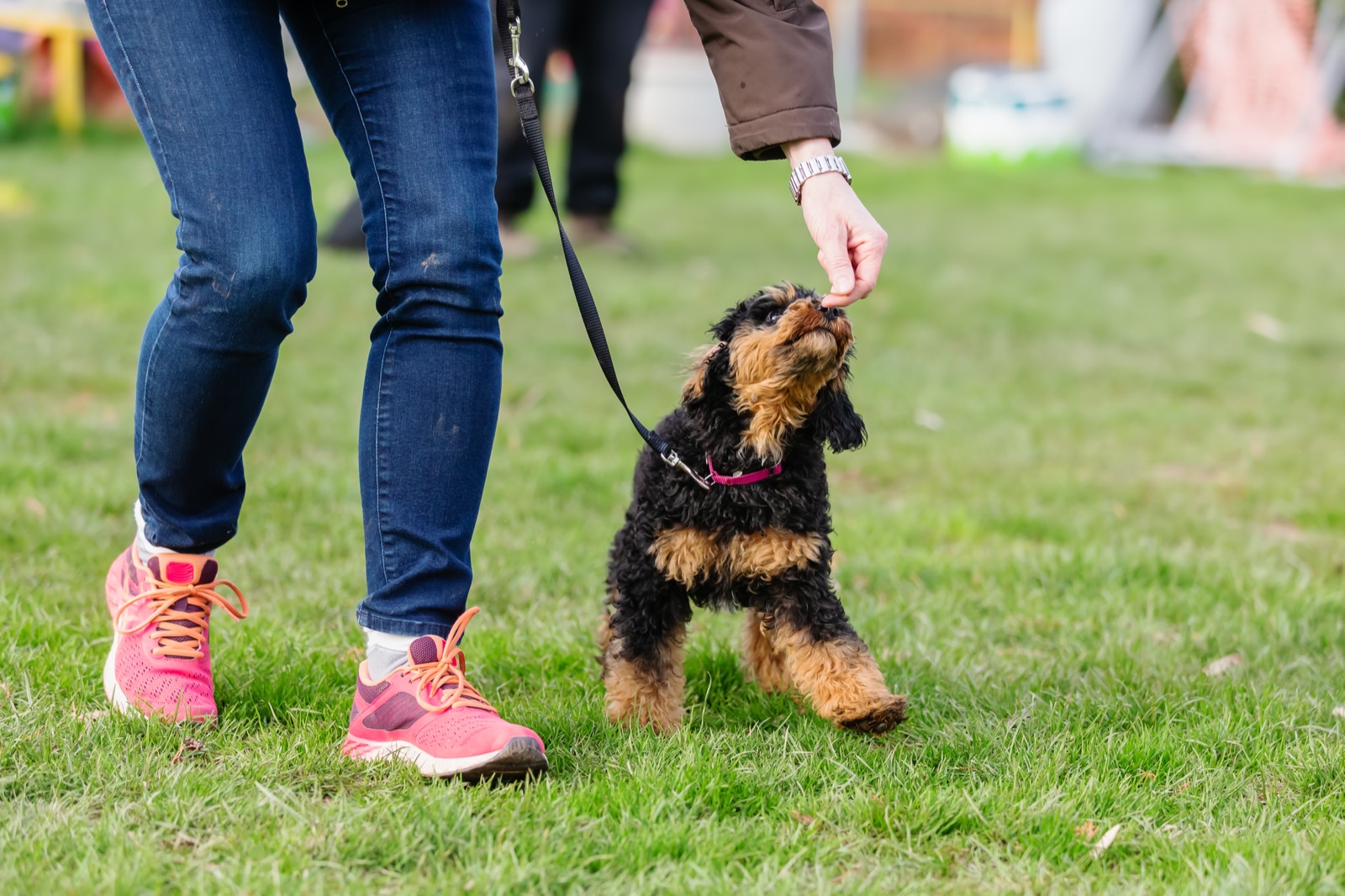
- Bring a comfortable harness or collar, leash, water, waste bags, and suitable rewards.
- Choose a safe spot with distance from the activity and room to leave.
- Watch the puppy rather than working through a list of things to expose them to.
Notice when the outing should end
Trying to escape, freezing, or becoming increasingly distressed are reasons to create space and stop, not to move closer for one final attempt. Refusing a normally welcome treat can be one useful observation, but treat-taking alone does not prove that a puppy is comfortable.
Afterward, note one thing that went easily and one thing to change. For example: “Watched two bicycles from a quiet spot; next time avoid the busy entrance.” Bring those notes to Emily if you want help choosing suitable experiences. The aim is a thoughtful plan for this puppy, not a tour of every dog-friendly destination.
A useful next step
Choose one manageable experience, check the rules, and keep the outing flexible. Your puppy does not need to greet everyone to learn about the world.
Sources & further reading
Put a plan into practice.
Tell Emily what you are working on and find a comfortable place to begin.
Explore puppy training